
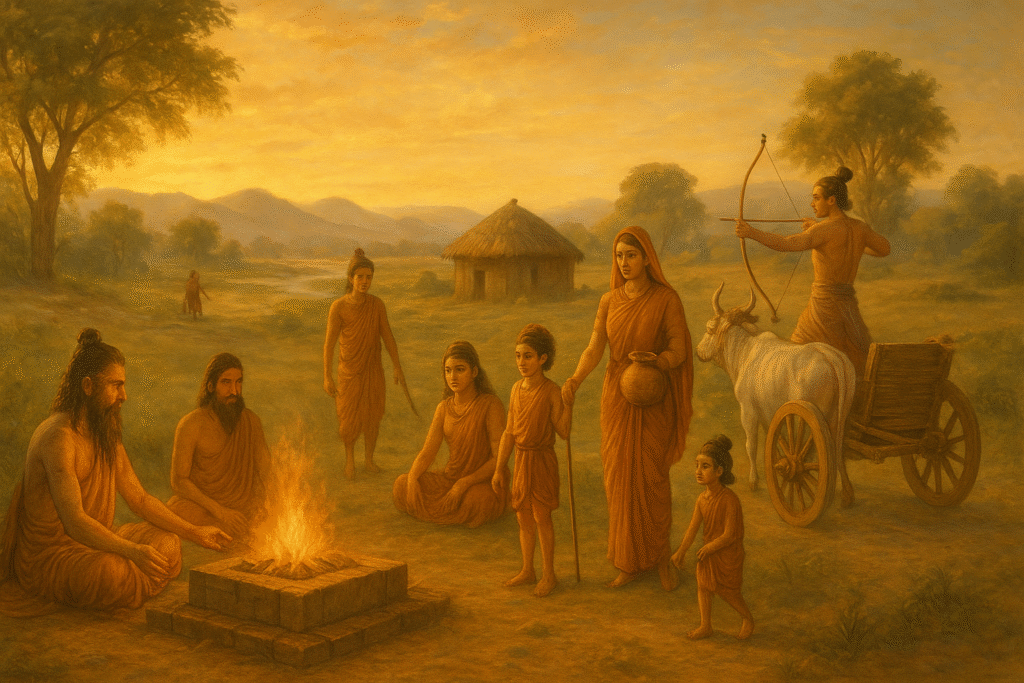

⭐ Introduction
Vedic Age भारतीय इतिहास का वह foundation है जहाँ:
- नई भाषा (संस्कृत) विकसित हुई
- धार्मिक ग्रंथ (Vedas, Brahmanas, Upanishads) लिखे गए
- सामाजिक संरचना बनी
- Early kingdoms की शुरुआत हुई
- Philosophy, science, literature का जन्म हुआ
यह काल दो हिस्सों में बाँटा जाता है:
- Rigvedic Period (1500–1000 BCE) — Early pastoral society
- Later Vedic Period (1000–600 BCE) — Agriculture, kingdom formation, social stratification
इस समय के स्रोत हैं: Rigveda, Samaveda, Yajurveda, Atharvaveda, Brahmanas, Aranyakas & Upanishads.
🔥 1. Rigvedic Age (Early Vedic Period)
Lifestyle
Rigvedic society mostly pastoral थी:
- People lived in small tribes (jana)
- Cows = wealth
- Horses = prestige
- Fighting tribes = common
Political Structure
- Rajan = tribal chief, not a king
- No huge kingdoms
- Sabha & Samiti = early democratic bodies
- Women participated → socially respected
Religion
Nature worship dominated:
- Agni
- Indra
- Surya
- Varuna
- Ushas
No idol worship, no temples.
Society
The early society relatively equal था — कोई rigid caste नहीं।
🌾 2. Later Vedic Age (1000–600 BCE)
अब चीज़ें dramatically बदलती हैं:
Agriculture Boom
- Plough agriculture
- Large settlements
- Surplus food
- Emergence of towns
Political Changes
- Rajan → powerful king
- Large kingdoms emerge
- Taxation starts (Bali)
- Standing army
- Complex administration
Kingship becomes formal & hereditary.
Religion Evolves
- Ritualism increases
- Yajnas become central
- Priests (Brahmins) powerful
- Gods like Vishnu, Rudra rise
Society Becomes Stratified
The famous Varna System crystallizes:
- Brahmins
- Kshatriyas
- Vaishyas
- Shudras
Initially based on work → gradually became birth-based.
Women’s Status Declines
- No more participation in Sabha
- Patriarchy grows
- Education restrictions begin
📚 3. Knowledge Systems & Literature
Vedic Age gave the world:
Vedas (Shruti literature)
- Rigveda
- Samaveda
- Yajurveda
- Atharvaveda
Brahmanas — Ritual manuals
Aranyakas — Forest texts (spiritual thought)
Upanishads — Pure philosophy
Upanishads introduced:
- Karma
- Moksha
- Atman
- Brahman
- Meditation
- Self-realization
These ideas influenced Hinduism, Buddhism, Jainism, and global philosophy.
🧠 4. Science, Maths & Astronomy
Vedic knowledge included:
- Zero concept seeds
- Lunar calendar
- Ritual geometry
- Metres, grammar, sound science
Panini (later) gave the most scientific grammar ever created.
🏞️ 5. Economy
- Pastoralism + agriculture
- Iron tools (Later Vedic)
- Barter → early coins
- Trade guilds evolve
- Specialized craftsmanship
Economic surplus created early kingdoms.
🧩 Conclusion
Vedic Age ने Indian civilization की नींव रखी:
- भाषा
- धर्म
- समाज
- राजनीति
- दर्शन
- साहित्य
यह काल भारत के civilizational DNA को परिभाषित करता है।
Episode 3 completes the philosophical & social beginning of Indian history.